Top Benefits of Getting Dental Implants From a Periodontist
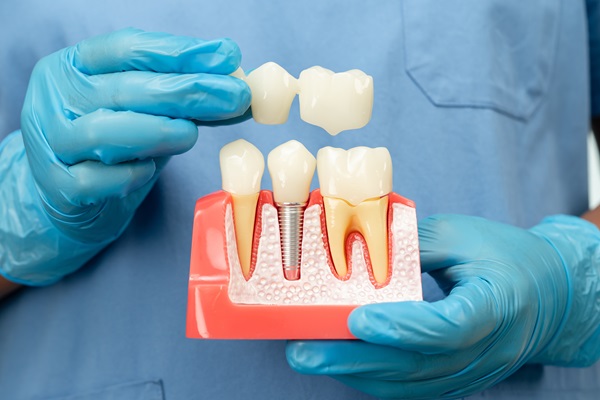
Dental implants can seem daunting for those who are considering them as an option for replacing missing teeth. They are installed directly into the jawbone, making them a more invasive treatment than something like dentures, which simply sit inside the mouth. However, dental implants offer a wide range of benefits that other solutions do not, making them worth consideration for anyone who is missing at least one tooth.
If you are a good candidate for dental implants, be sure to consider the many advantages that this tooth replacement option can provide when making your choice. From longevity to restoration of natural function, there is a reason that many periodontists install implants as a regular part of their practices.
Why dental implants help oral health
To install a dental implant, a periodontist will make an incision into the gums in order to expose the jawbone. Then, they will install a metal rod into the bone, often by screwing it in. Once the bone heals around the post and integrates with it, the post can be used to support an artificial tooth. This method of tooth replacement comes with many advantages related to the fact that the tooth is anchored to the jaw.
Stimulates the jawbone
The jawbone is the strongest bone in the face and one of the hardest in the body. However, it achieves its health and density from the constant stimulation that it receives from the teeth. When a person chews, the pressure on the teeth transfers into the tooth roots, which stimulate the jawbone. When a person loses a tooth, they can experience a gradual atrophy (reduction) of jawbone density as a result.
A dental implant benefits oral health by anchoring into the jawbone, serving as replacement tooth roots. This ensures that the bone is stimulated and remains strong even after the original tooth has fallen out.
Stabilizes nearby teeth
The teeth work together as a unit, enabling a person to chew, grind, bite, and puncture their food. While the gums play a significant role in keeping teeth straight and strong, the nearby teeth also help. When a person is missing a tooth, the remaining teeth nearby might start to shift and move, impacting the bite and the person’s oral health.
A dental implant fills this gap with another functional tooth. As a result, the overall dentition can remain stable and healthy.
Restores the smile
Of course, most people pursue dental implants because they are self-conscious about the gap in their smile, and this is completely valid. Dental implants are made of materials that closely mimic the natural teeth, so they can be nearly indistinguishable from a person’s own dentition. This way, patients can enjoy a fully restored smile without the risk of someone spotting their prosthetic, as might happen with dentures.
Lasts longer than alternatives
The materials used to make a dental implant are crafted to last as long as possible. Unlike dentures, which are normally replaced every five to 10 years, the metal rod inserted into the jawbone will typically continue to function for the rest of the person’s life. Once the post has fused with the jawbone, patients can expect that this part of their treatment is likely to be permanently complete.
However, the artificial tooth affixed to the metal rod may need to be replaced from time to time. On average, a person might need a new crown for their implant every 15 to 20 years, but many patients see their implants function well beyond this window if they have good oral care. Replacing the tooth is a simple swap and does not require extensive drilling work like a crown on a natural tooth would.
Functions naturally
Since a dental implant is fused directly into the jawbone, it can handle the same stressors that the other teeth can. Unlike dentures, which can be unseated by certain foods or behaviors (such as talking), dental implants function naturally to help patients enjoy life the way that they want to.
Explore dental implants from a periodontist
Periodontists often install a dental implant because it is a highly effective method of tooth replacement. While it is true that the installation process is more invasive than alternatives like dentures, the result is something that can last for decades with good oral care. Contact our office to explore your dental implant options with our periodontist, and discover if you are a good candidate for implant placement.
Are you considering dental implants in the Cypress area? Get more information at https://www.charlesdyeriv.com/.
Check out what others are saying about our dental services on Google: Dental Implants in Cypress, TX.
Related Posts
Receding gums is a condition that leads to gum tissues pulling back from teeth roots. It leaves these roots exposed to acids made by oral bacteria that cause decay. Unlike the crown of a tooth, which is protected by enamel, teeth roots have an outer layer called cementum that is not as durable as enamel.…
When advanced gum disease (periodontitis) creates deep spaces around the teeth, pocket reduction surgery can help make those areas easier to maintain. These periodontal pockets collect plaque, tartar, and bacteria below the gumline, where routine brushing and flossing cannot reach effectively. As pockets deepen, inflammation can damage the gum tissue and bone that support the…
Dental crown lengthening is a periodontal procedure that reshapes gum tissue and, when necessary, the underlying bone to expose more of a tooth's surface. A periodontist may recommend this treatment before restorative care or to improve the appearance of an uneven or overly prominent gumline. Understanding each stage of the process can help patients know…
One essential step a person can take to prevent receding gums is to maintain excellent dental hygiene. Most individuals often neglect their gums and focus on dazzling, pearly white teeth when it comes to oral health. However, having healthy gums is just as important as having healthy teeth.Gum recession has the potential to cause tooth…